Where has all the Ed Tech gone? A defining moment?

Roy Halpin
HudCRES
My doctoral research focuses on the uses of technology by trainee teachers. They commonly report being faced by two key issues - outdated technology and the use of technology without a real purpose or understanding.
My last 'Ed Space post suggested that digital technology was being used sparingly, if at all, within many classrooms, workshops, salons and other teaching and learning spaces. Is it possible that teachers are, at last, having confidence to deploy technology appropriately and on their own terms rather than at the behest of the tech industry or at some managerial or governmental whim?
The seeds of change
Teachers in all sectors are constantly bombarded by new initiatives and policies that have to be worked through, implemented, side-stepped or quietly ignored, an approach that has been dubbed strategic compliance (Orr, 2012). Further Education in the UK is heavily overloaded with such innovation, resulting in some interesting yet often disastrous policy decisions in recent years (Norris & Adam, 2017).
The use of digital technology is a great example. In some cases, initiatives have been pushed through on a large scale but just as often they are adopted quietly within institutions. We are all familiar with examples of technology that worked for a while but was never updated, or mass-rollouts of packages that didn’t quite do what the sales team promised. Unfortunately, there are just too many examples of policy being derived from the products available (Player-Koro et al, 2018). Products drive pedagogy.
But I sense a change afoot in schools, colleges and universities. Maybe, just maybe, the silliness that assumes that disruption by new technologies, like market forces, are always a good thing, has had its day and there is just a chance that more sensible decisions are being made.
The key thing that seems to have happened is that many teachers have simply ignored recent fads in educational technology and have instead just used the basic systems - those they find intrinsically useful and easy to navigate, and which do the job.
This kind of tactical ignoring of ‘new noise’ might just allow headspace to consider other ideas and technologies that are of more benefit, sometimes from unlikely sources.
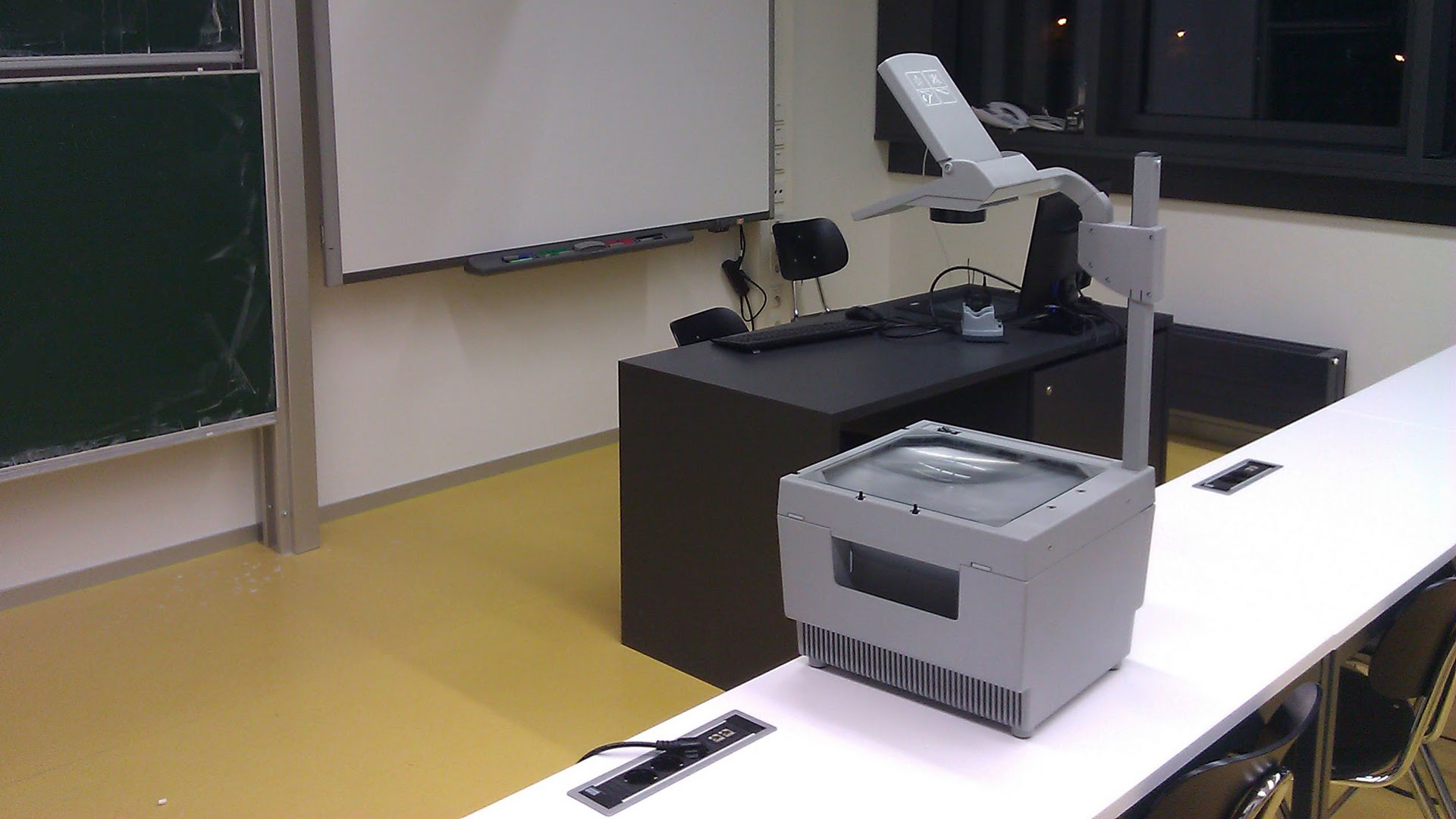
A good example is the visualizer – a camera on a stick that can sit on a teacher’s or student’s desk and be used just like … an overhead projector (OHP).Isn’t it interesting that we have come almost full-circle to end up with a modern-techy version of a tool that served us well for 40 years. Faithful and much-loved, OHPs were ruled obsolete in most institutions around the turn of the century as part of a full-scale conversion to allegedly interactive projection technology. Well, it turns out that maybe teachers did know about useful technology after all and that they weren’t being deliberately awkward at the thought of losing this traditional piece of kit.
OHPs, in skilled hands, encouraged a level of spontaneity, interaction and instruction that often disappeared in the age of the whizz-bang PowerPoint.
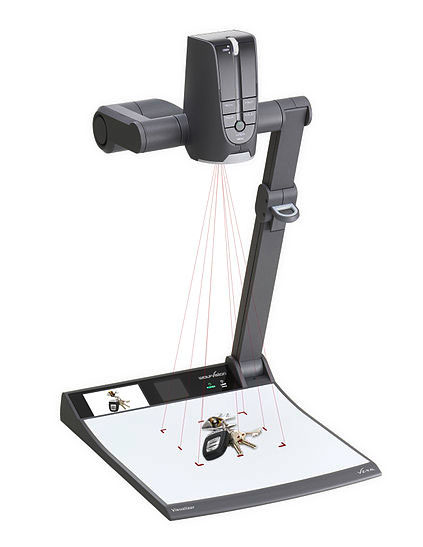
A decade or more on and new versions are being invented and are breaking through. Technology that does the same job as the old but with enhancements. It has taken this long for all of the required digital infrastructure to mature and converge; to become stable enough to be trusted for use in the classroom (Michaela School, 2017).
Let’s consider the noughties revolution around classroom design. OHPs and whiteboards were old-tech. Digital projection was the answer, and seemingly often the only answer. Wasn’t it just a bit daft that many new teaching spaces were built without whiteboards – with the projector screen (and maybe a non-write e-board) as the main centrepiece? A classic case of architects, industry and senior managers telling teachers how they should teach and what tools they were going to have available ‘[over-emphasising] the virtues and efficiency information and learning technology (ILT) supposedly affords’ (Smith, 2017, p.859).
Can we imagine professionals in other industries being told how to do their jobs and what technologies to use?
Sorry, Sir, we haven't got any shovels, but here's an iPad.
A whole sports field and training suite? Have this small room at the back of the building, I’m sure you’ll be fine, it has a projector.
Oh, and by the way, we spent the money on buildings, projectors and interactive whiteboards.It’s a bit of a shame, but we didn’t have any money left for new computers so everything is a bit slow…
My own doctoral research focuses on the uses of technology by trainee teachers. They commonly report being faced by two key issues - outdated technology, and the use of technology without a real purpose or understanding. Surely there is a connection here? If we can’t make the pedagogical case for why we need the Tech, then we also can’t expect senior leaders to continually invest a large proportion of a shrinking budget.
So, digital technology?
Yes please! I’ll use powerpoint slides sparingly, but I also want whiteboards – lots of them. I want to write on the walls and fill my room with discussion and ideas. I want to easily show everyone in the room something intricate on my desk. I want a camera on a stick that does what my old OHP did, and a lot more.
And I want this technology to be replaced with some regularity so that it remains functional ... that 10-year-old dusty laptop really won’t do.