Cake by cake, walk by walk: the practices of a writing retreat

Dr David Powell
HudCRES
Anne Lamott’s (1994) Bird by Bird is my go to text when I am looking for advice and inspiration as I am preparing to write or whilst I am writing and editing. If you are not familiar with Lamott’s book, here is the story that gives it such a catchy title. Lamott’s brother, having procrastinated for three months the writing of a ‘report on birds’ (Lamott, 1994, p.47) for school, is sat at the kitchen table the night before it is due, surrounded by potential source material and ‘close to tears’. Sound familiar? His father, a writer, notices what’s happening and sits next to his son, saying: ‘Bird by bird, buddy. Just take it bird by bird.’ Wise words.
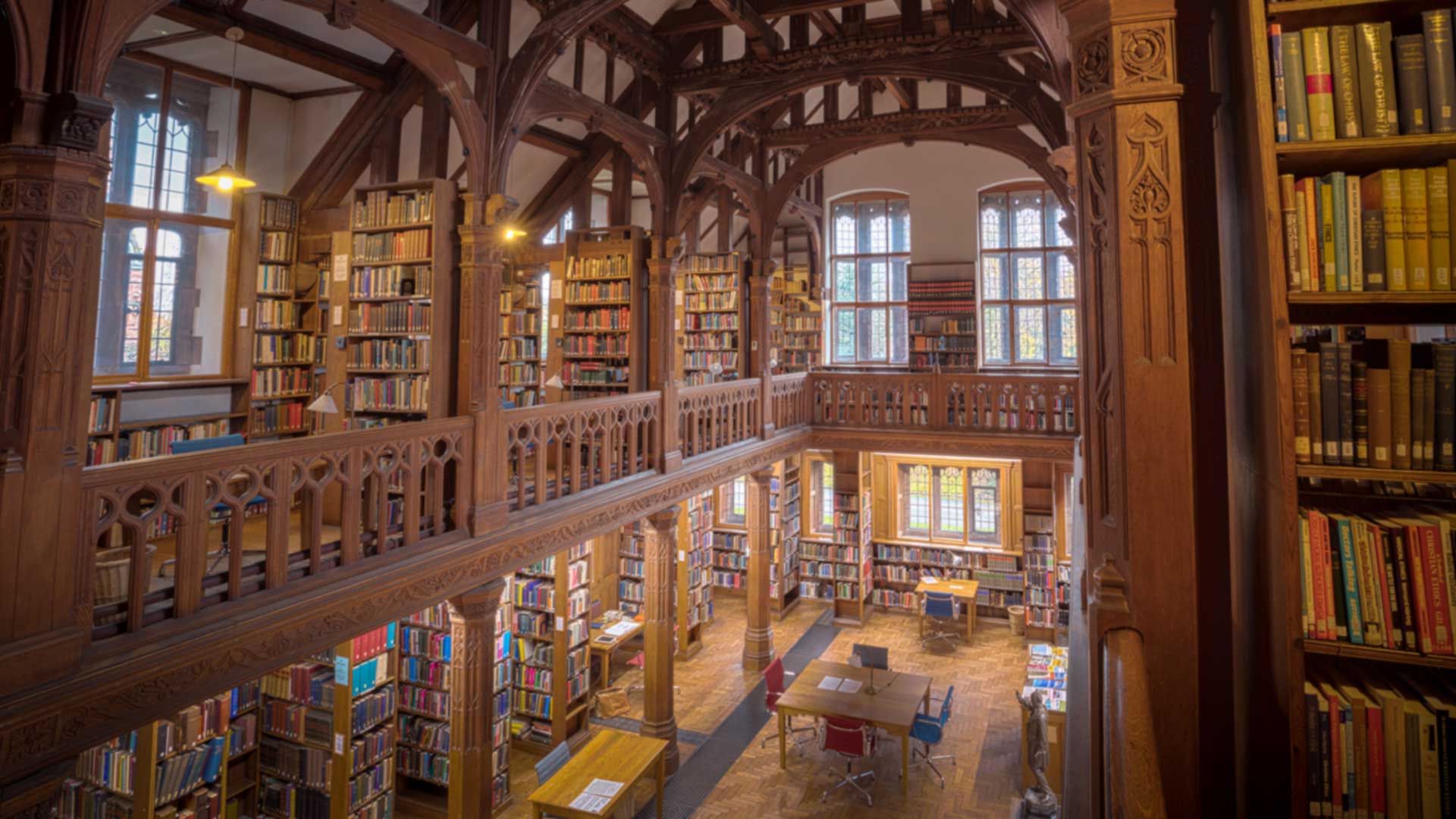
I have recently returned from a four- day/three-night writing retreat at Gladstone’s Library, Hawarden, Wales (shown above). As the son of a ‘Valley Boy’, Gladstone’s is a home from home for me. Even more importantly (if that’s possible) than being half-Welsh, it's where I have worked through problems I have been having with specific pieces of writing. For example, resolving how I was going to analyse some of the data for my doctoral thesis, writing a piece for the VELON journal (journal of the professional association for Dutch and Flemish teacher educators) on learning to look, which I wrote with Dr Anja Swennen, and writing a large section of the chapter I wrote with Anja on Brave Research.
Combining Kemmis' et al. (2014) work on practice theory and autoethnography, this blog considers some of the practices of writing retreats, how they are interconnected and how they shaped my practice of writing. I will briefly consider the theory of practice architectures here, too, and how a site's three practice arrangements prefigure but do not pre-determine the practices of the retreat.
Practices, intersubjective spaces and the theory of practice architectures
Practices are everyday human activities that happen over a period of time. Some of those we might be familiar with include going for a coffee at lunchtime, teaching a one hour lecture, student learning as they sit through that one lecture, researching a funded project for three years, and writing up a journal article. Kemmis et al. (2014a, p. 38) assert that a practice consists of:
- ‘sayings’ - which reflect the language of the cognitive domain,
- ‘doings’ - which are the actions of the psychomotor domain, and
- ‘relatings’ - which characterise the behaviours of the affective domain.
These ‘sayings, doings, and relatings’ [or actions] ‘hang together’ in ‘the distinctive project' (ibid, p. 56) of a practice. In this instance, the project is the University's writing retreat at Gladstone's.
In turn, these practices and the project happen in "three intersubjective spaces that connect its participants: ‘the semantic space and its medium of language; the physical space-time and its medium of activity and work; and the social space in the medium of solidarity and power’ (ibid, p. 34). In turn, these spaces are shaped by the practice architectures of the site: the cultural-discursive arrangements, the material-economic arrangements, and the social-political arrangements." Powell, 2020, p.10.
Some of the practices of the writing retreat and what shapes it
There were ten of us on the retreat. Three colleagues are very close to submitting their doctorates, so focused on that. Six others, including myself, were working on a piece of writing and Professor Robin Simmons was there to support our writing through the practice of supervision. Along with the practice of supervision, this blog considers three other practices that shaped my writing within this retreat and over these four days - cake and coffee breaks; walking; and the ‘academic nap’, the intersubjective spaces where these occurred and the practice architectures of the site shaping them.
My project for this writing retreat had three goals:
- Finish a piece on FE-based teachers educators’ lives and work that I had almost finished during my last visit to Gladstone’s in February 2020 but had been on ‘the hard shoulder of the M62’ because of the pandemic.
- Start planning a new book I am hoping to write with some Huddersfield and international colleagues.
- Discuss a piece of writing I had published in a journal to see how I might have improved it.
Because of the COVID-19 rules in Wales in January 2022, Gladstone’s had asked us to establish bubbles of no more than six colleagues for our meals and refreshment breaks. This combination of the cultural-discursive arrangement of the rule of 6, the socio-political arrangements of our existing professional relationships and the material-economic arrangement of the way the tables were set up and how close they were to each other shaped who we sat with and spoke to during the retreat.
One of the treats and delights of Gladstone’s is its hospitality. You are released from your own day-today cares of what to buy, what to eat and when to eat and instead are eased into the material-economic arrangements of Gladstone’s daily rituals that happen in the material space-time of eating and drinking together at set times: Breakfast from 8.30am; Morning Coffee and Cake at 10.30am; Lunch at 1pm; Afternoon tea and cake at 3.45pm and dinner at 6.45pm. These arrangements, and the cultural-discursive arrangement of the bubbles, enable and constrain the ‘relatings’ of the semantic space of academic conversations as you share your work in the social space of collegiality, though only with colleagues you are sat with (or have chosen to sit with).
For many, the treat of a morning or afternoon ‘cake’ lifts the writing spirits and energises us for our next appointment with our keyboards. Cake by cake we write.

Breaks create material space and time for conversation (relatings) and thinking aloud about your work (sayings) with knowledgeable colleagues. Later, this becomes visible in the ‘sayings’ and ‘doings’ of my writing.
Whilst we mostly talk about our research, as we are away from the daily grind and constraints of the office or Teams meetings, we open up and get to know each other better, strengthening our professional relationships.
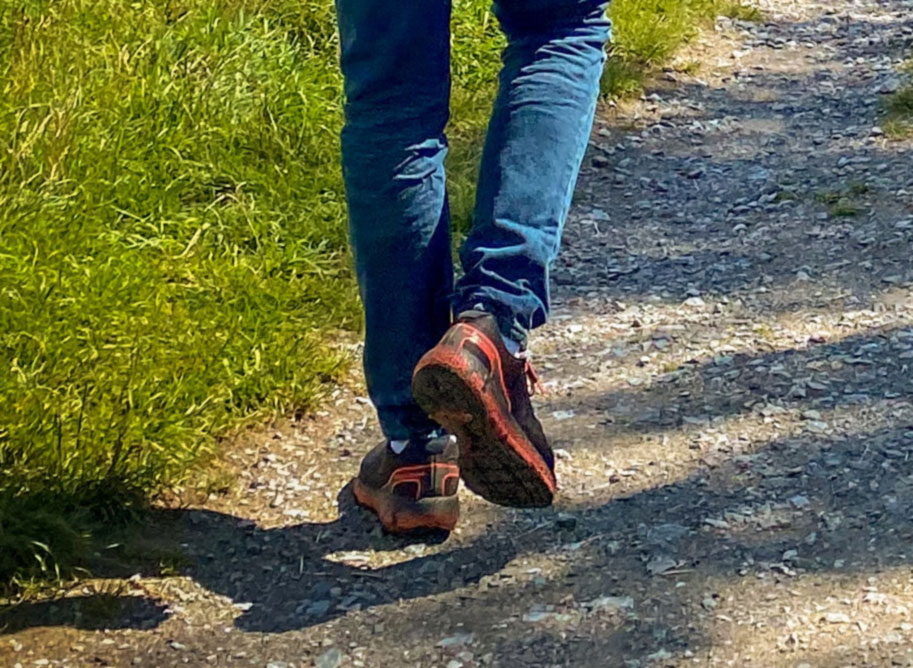
Of course, one cannot simply eat on a writing retreat. Gladstone’s location in the small town of Hawarden means that, weather permitting, you can walk (off the cake) in the beautiful Hawarden Estate. Solvitur ambulando is a Latin phrase attributed to St Augustine of Hippo. Literally, it means 'it is solved by walking'.
When I am Gladstone’s I often walk for about an hour alone, allowing ‘the sayings’ of my writing to percolate through me as I wrestle with a passage. Whether it is the fresh air, the walk or the landscape, often, by the end of my walk, my writing block is solved. If not, it is invariably being resolved. Sometimes, I walk with a colleague and we chew over our writing dilemmas. Solvitur ambulando lies at the heart of my practice of writing, enabling it.
The busy-ness of my professional life means that, perhaps like many, I may not be getting the sleep I need. Because I am away from the office, and also the responsibilities of caring for my father, inevitably I am more relaxed at Gladstone’s and usually, at least once, I will find myself in need of an ‘academic nap’ late morning or just after lunch. Whilst the ‘academic nap’ is under rated (in my opinion) and under researched, I have been advocating its contribution to the practice of academic writing for some time. For instance, I have recommended the value of an ‘academic nap’ of no more than an hour to the School of Education and Professional Development’s doctoral students as a way to re-set themselves and sustain their writing practice. Put simply, sleep enables us to write.

Colleagues tell me they like what and how I write, though, like other academic colleagues, I am also subject to the metrics of the REF and the expectation that I publish at least 2* if not 3* material. Colleagues suggested that one of my recent pieces might fall somewhere between 2 and 3*, so I took up the offer of a meeting with Robin, our supervisor-in-residence, to see if and/or how I might change my writing practice to move it into the 3* band. We met in the Gladstone Room, the Library’s common room for its guests. Laid out with comfy chairs, reading tables and chairs, and a ‘roaring fire’ in the evening I find it a relaxed space for meeting up. I have known Robin since I started at the University and before COVID-19 would often pop in to his office for a non-academic chat. I trust his judgement, too. For me, this created the right climate for an important conversation about my writing. In the semantic space of language, the material space-time of the supervision meetings and the social space of our respective roles, we chewed over my writing and I made notes. Robin’s comments were ‘spot on’, as my Dad says, and I left the meeting energised and with some really helpful advice and ideas for my next piece. In this instance, the practice of supervision was enabling my writing.
Did I achieve my three goals?
Emphatically ‘Yes’. I had the time to read Loo’s (2020) The professional development of teacher educators in Further Education prior to making the final edits for the publication the University of Huddersfield Press have agreed to publish. I had a profitable meeting with the University of Victoria’s Professor Budd Hall about a possible new project and identified and recruited a potential member of the editorial team over breakfast one morning. And I am much clearer about how I might write and publish an article likely to be considered as 3* by REF criteria next time.
Hasta luego Gladstone’s
When I left Spain’s Deans and Directors of Education conference in Seville in October 2019, I said to my Spanish colleagues ‘hasta luego!’ Literally, see you later. The pandemic has disrupted and re-ordered our lives in so many ways. My last visit to Gladstone’s had been in February 2020, before the pandemic, or BC (before Covid) as some people might refer to it now. Over meals and breaks, we remembered our previous Gladstone’s writing retreats and realised how fortunate we were then and how good it was to be back there. It really was a treat to be looked after so well by Gladstone’s. It is a special place, as many people know. A private universe where we can indulge our passion for writing and become better writers. I am already looking forward to my next trip. Hasta luego Gladstone’s!
A final thought ...
To conclude, I offer up to you some ‘Cake Theory’ from Charlie Mackesy’s mole (The boy, the mole, the fox and the horse, 2019) if you are struggling with your writing:
“Do you have a favourite saying?” asked the boy.
“Yes” said the mole.
“What is it?”
“If at first you don’t succeed, have some cake”
“I see, does it work?”
“Every time.”