
Get involved with volunteering

Dora Marcec
Biomedicine BSc(Hons)
Hello, my name is Dora and I am a Biomedicine student at the University of Huddersfield. I come from Croatia, where I was an International Baccalaureate student. Apart from science, I love photography, reading and teaching myself how to film and edit videos.
Why should I volunteer?
Volunteering when you’re a student is a great way to get some experience in your field of study during your first year of university when you are still ineligible to apply for most internships and summer placements.
It can also be a great way to get involved in the local area and make a difference to people, at any time, when you're a student.
Plus, it will demonstrate that you are proactive and have initiative!
Volunteering in your area of study
It can be quite difficult to find volunteering opportunities that are within your field of study, but there are still opportunities you can pursue.
I find that especially true for courses from Biological Sciences department, so in this blog I will share my volunteering experience as a Biomedicine student and what opportunities there are for other disciplines.
What I did in my first year, and what I highly recommend you do too, is to volunteer in citizen science projects.
Citizen science is “active public involvement in scientific research”, according to an article by Aisling Irwin published in Nature.
I volunteered remotely on Zooniverse. One of the reasons why I highly recommend this is because I got commended about it in one of my placement interviews. It turned out that one of the research groups in whose project I volunteered was established at the same institute as the research group I had an interview with.
Zooniverse is a website where research groups can build a citizen science project in which citizens and students like me and you can help them in their research.
How does it work?
On Zooniverse, projects are categorised into disciplines such as arts, biology, climate, history, language, literature, medicine, nature, physics, social science and space. As a Biomedicine student I lean towards medical projects as most of them are quite relevant to my field of study.
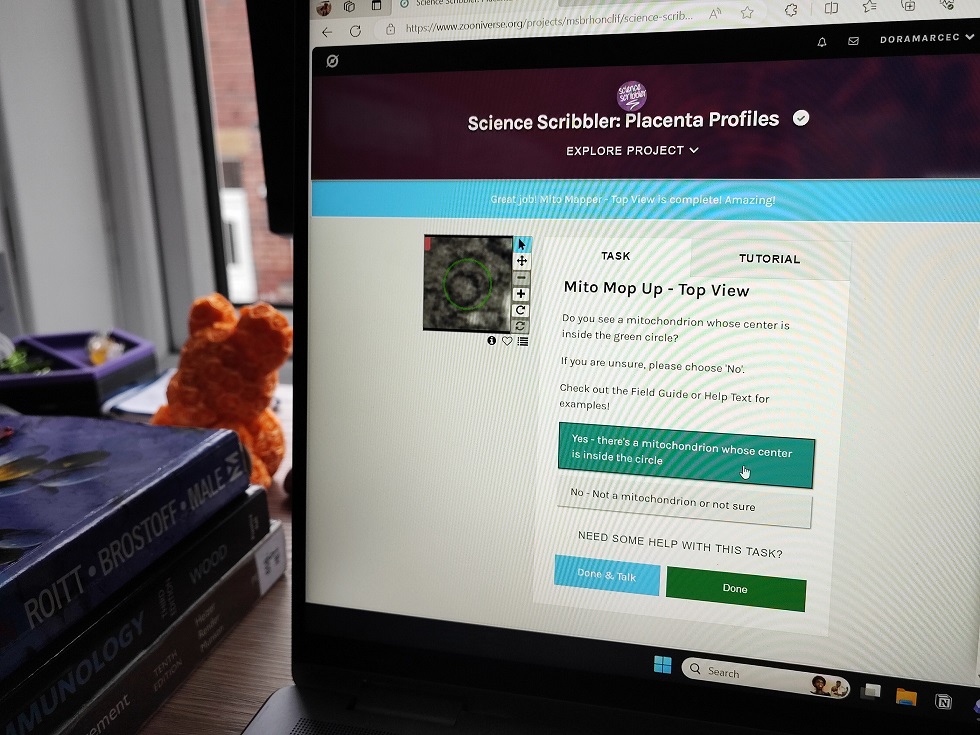
Most of the projects that I took part in presented me with an image taken on an electron microscope, called electron micrograph, and I had to select or draw around a specific cell organelle - most projects give you a tutorial on how to do this correctly before you start.
For example, in Science Scribbler: Placenta Profiles project I had to select mitochondria in micrographs, and the idea was for the researchers to accumulate a big dataset of marked micrographs which can then be fed into an AI software that will be used to detect changes in mitochondrial dynamics in placenta by itself.
For me this was super fun and convenient. It felt like playing an online game except that I was contributing to actual research and volunteering to advance scientific discovery.
While writing this blog, I have found a few more platforms where you can find citizen science projects, including EU-Citizen.Science, BOINC and SciStarter.
Approach your lecturers
You only become eligible to apply for most summer placements in your second year, unfortunately. However, if some of your lecturers have unanalysed data, you can volunteer to help them analyse it.
My close friend approached one of our lecturers this way, and the lecturer was more than happy to let her analyse her micrographs from cancer cells treated with different drugs to determine the changes in protein levels in the cell.
This is another great way of getting experience in your field of study during your first or second years at the University and it lets you apply what you’ve learned, and contribute to a greater extent than you would in citizen science projects, as citizen science projects don’t require any background knowledge in science.

Volunteering opportunities that are not entirely in your field of study but still relevant
Joining a committee in your academic society
This may not provide you with direct experience in your field of study, but it is a great way to develop interpersonal skills and network with your lecturers, students, and experts working in the field by inviting them to be a guest speaker for your society, for example.
I was in the committee of the Bioscience Society at Huddersfield Students’ Union throughout my second year and placement year and I could not recommend taking a committee position more.
Volunteer in museums
Most museums offer some type of volunteering experience. I had a look at what opportunities there are at Science and Industry Museum in Manchester, which is only a train ride away from Huddersfield.
There are also opportunities in local museums or galleries too.
Volunteer with learned societies
The Royal Society of Biology is a learned society for my course, and it also provides accreditation for it. If you are doing a non-biology course and your course is accredited, the accreditation may be coming from your learned society. Make sure to check if it offers any volunteering opportunities!
If you are a biology student you can volunteer for Royal Society of Biology by getting involved with outreach and engagement.
Likewise, you can volunteer for Biochemical Society by getting involved with public engagement or apply to become a Student Ambassador for the Biochemical Society.
Volunteer in zoos, wildlife or national parks
This could be relevant to some biology students but also to anyone who loves nature and animals. You’d be surprised to know that many zoos, wildlife parks as well as national parks need a helping hand and offer volunteering opportunities.
- Chester Zoo offers volunteering opportunities.
- Some of the national parks at which you can volunteer include Lake District, Peak District, Snowdonia and Cairngorms.
These voluntary positions may not equip you with technical experience of analysing datasets from your field of study, but they may equip you with interpersonal skills that are normally quite difficult to evidence in your CV and help you present yourself as a proactive and altruistic persona eager to contribute.
More general volunteering opportunities
There are also general opportunities to volunteer locally. These are a great way to get to know the local area and feel like you’re part of the community and making a difference.
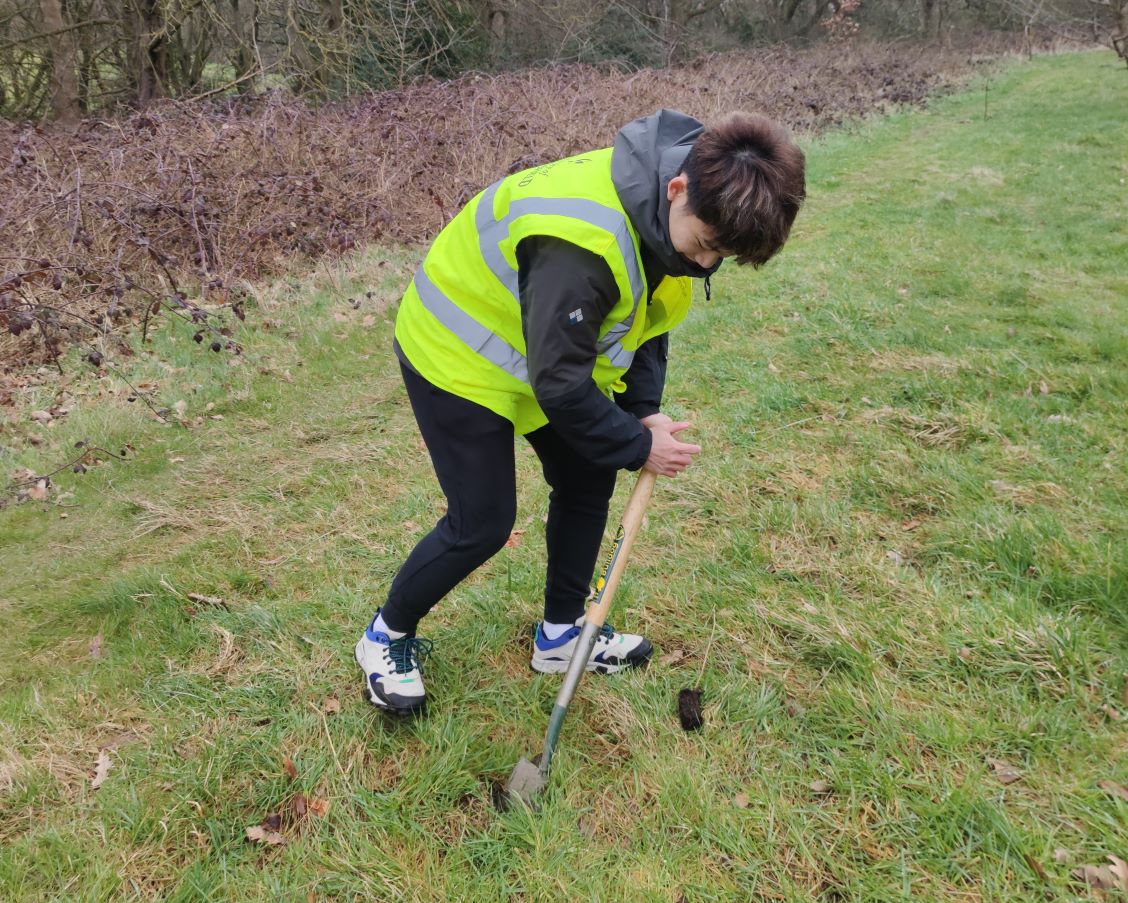
You can find out about these volunteering roles through the University's website. These even include helping the University to plant a tree for every student who enrols here.
There is also a website dedicated to volunteering roles across the Kirklees area, which Huddersfield is part of, called TSL Kirklees.
Roles are really varied, both in terms of the type of work you can do, and the hours. You can also sign-up to get volunteering opportunities emailed to you.
I hope this blog was helpful and gave you some ideas on how to get some volunteering experience when you're a student!
More student blogs
Read more blogs from our students about life as a student at Huddersfield.
Chat with our students
Do you want to ask our students anything?