
Coronavirus lockdown – yet many seek to escape to the country… why?
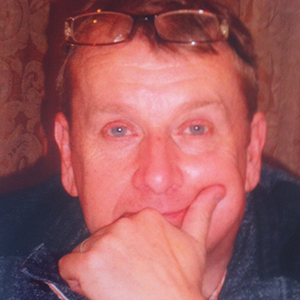
Dr Chris Cameron
Behavourial Scientist
...explores our impulse to ‘escape to the country’ when common sense says we would be safer in isolation
“Escape to the country. For generations of town and city dwellers, that sweet refrain has swelled in the hearts of ordinary folk. On his return to Tintern Abbey in 1798 William Wordsworth, not yet thirty years of age, expressed our very English desires to commune with nature thus:
‘In darkness and amid the many shapes of joyless daylight
when the fretful stir, unprofitable
and the fever of the world have hung heavy on the beating of my heart
how oft, in spirit I have turned to thee’
For sure, much has changed since Wordsworth’s time. Yet, his birth meant that his forebears lived through the Great Plague of 1665/6 at least long enough to have children. They, in their turn, would recall the blind terror of that event, as we will remember the fear of Covid-19. Then, in town and cities beset by the two strains of Bubonic Plague and death on an imaginable scale – and unaware of its vector of transmission – people wore ineffectual masks to protect them from ‘malodourous vapours’. The cures were often awful to contemplate and as unserviceable as the masks they wore. Open sores and bathing in your own urine anyone? Fear drove city dwellers to flee into the countryside contributing to the spread of Bubonic Plague almost on to our doorstep in Huddersfield. It reached Mirfield and Dewsbury. At Eyam, in Derbyshire, Rector William Mompesson begged residents to self-isolate. They did so and many died, rather than spread Bubonic Plague further to great centres of population nearby in Sheffield and Chesterfield.
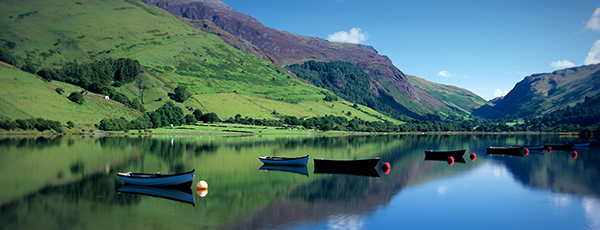
In our days, plagued by Covid-19, we would arguably profit from a reminder of Santayana’s aphorism that those who do not learn (the lessons of) history are doomed to repeat it. Surely, in our modern world, with all our knowledges, technologies and medicines, we will not see history repeat itself with Covid-19. People have been unequivocally instructed by central government to self-isolate, this edict being further supported as local councils, tourist boards and National Park Authorities alike urged to us stay away from rural areas. Do not escape to the country! Despite this, Snowdonia National Park declared that this past weekend was its busiest for visitors in living memory. We have seen hundreds, if not thousands of people venture out into the countryside seeking respite from confinement in towns and cities and the social isolation that Covid-19 has brought in its wake.
This needs a little explanation, partly because this illogical and dangerous exodus was so very predictable and thus potentially preventable. In this piece, the explanation is formed from a behavioural science perspective, so perhaps the reader will permit me a line or two about that. Behavioural Sciences was the undergraduate degree I took at the University of Huddersfield and it continues to this day. In fact, I now lead the course. It is a strange, but heady brew. We may think of it as just another way of explaining people’s behaviour. But it is one that can more properly be thought of rather like a disinherited child. A hybrid for sure, of sociology and psychology – and stranger yet, more disciplines. Its strangeness ensured it was set adrift and other disciplines have worked hard to ensure it lives only in the shadows of their self-sanctioned greatness. It’s discipline I’m told that nobody really understands – as if we ever really understand anything! So yes, neglected and maligned – but still potent. So now I’m going to make a behavioural sciences argument (rather partial and incomplete, of course) to show that the reasons for this exodus to the country – and its apparent disregard for all our welfare – is imbedded in understanding people as, at once, cultural, biological and psychological beings whose decision making is influenced by rational thought for sure – but at least equally influenced by our feelings and emotions. Let’s start with the culture and sociological insights, because most things do.
We begin then by considering the effects of our search of a cure for that other great plague of our times, mental health issues. Here, science has recently returned to nature for answers – in the form of the ‘green prescription’. Prior to Covid-19, hardly a day had gone by when we were not reminded about the benefits of experiencing the great outdoors. Merely having a view of a wild space from our hospital bed or simply having green plants in our hospital environments has been claimed to reduce our experience of pain, anxiety and fatigue – and our recovery times. Our emotional well-being is included in this ever-growing list of benefits. These benefits are centred around the function and our use of outdoor spaces and their contribution to positive emotions such as affection, happiness, and relaxation, vitality and self-confidence.
So, the cultural transmission of such notions of the ‘health outdoors’ runs deep and inevitably penetrates our collective consciousness. We are all living in a culture that has led to feel good about the countryside and that the countryside is therapeutic. Little wonder that in times of ill health and trouble we decide to escape to the country!
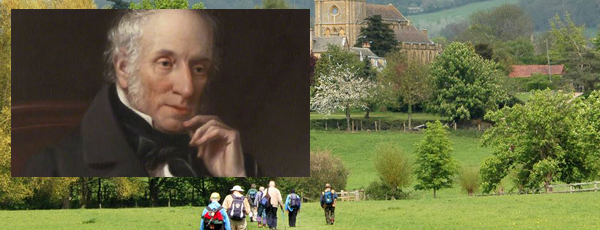
This now deeply embedded notion of the countryside as a sort of ‘green prescription’ echoes the earlier sentiments of poets like Wordsworth and Byron, whose work still calls to us down the ages. Why should we be concerned with dead poets? Well, poets are artists who paint with words. Like many artists, they don’t just paint what they see, they paint what they feel. Their words ring true because they still resonate with our feelings today. So, no apologies for words from Wordsworth again, his Prelude this time, to loosely introduce our next piece of explanation:
‘Oh, there is a blessing in this gentle breeze, a visitant, that while it fans my cheek
Doth seem half conscious of the joy it brings from the green fields
and from the azure sky.
What’er its mission, the soft breeze can come to none more grateful than me
Escaped from the vast city where I long had pined, a discontented sojourner
Now free, free as a bird, to settle where I will.’
Wordsworth paints our modern feelings with his old words, feelings unchanged by the passage of centuries. Emotions are important here because they feature largely in the second element of my behavioural sciences explanation, this time a biological one. As
Wordsworth’s words illustrate admirably, engaging with the countryside simply makes us feel good – and of course, we do rather like to feel good. From a biological perspective however, it is the endorphins released by exercise out in the countryside that make us feel good. These neurotransmitters, like serotonin and oxytocin, are released when we exercise outdoors – and that stimulates the ‘feel good’ parts of our brain. Some have called such neurotransmitters, especially oxytocin, the ‘hormone of love’ as it can even evoke the euphoric feelings of those heady days of ‘new love’.
Now, lots of things can cause a release of endorphins into the brain; laughter, eating chocolate or spicy food, meditation or the pain of childbirth. But of course, our culture has ensured outdoor exercise is the big one when we think about feeling good. The endorphins released by outdoor exercise are nature’s ‘feel good’ drugs. We get a taste for them and we want more. We even get withdrawal symptoms if we don’t get our fix. No wonder we decide to escape to the country! So, there are what we might call ‘pull factors’ at work in explaining our decisions about escaping to the country. Things that draw us out into the countryside. We’ve touched on potential cultural and biological ones already.
But there’s another, final factor we may consider. For this brief piece, there’s an evolutionary psychological ‘push factor’ implicated in our decision making too. Something that strongly influences our decision to escape to the country and pushes us away from town and cities, yet bonds our disconnected family and friendship networks back together too. This factor centres around the evolution of our psychological and decision-making processes. In our so-called rational world, where our head is said to rule our heart (as if that were ever true) it is easy to disregard the role of feelings in our decision making. Yet we do so at our peril. Evolutionary psychology teaches us that our decision-making processes were founded long ago, hard wired into our minds by hard won experience, designed to ensure our survival and transmitted genetically by the inherited ways our neurology is formed, that is, how brains develop and ‘connect up’.
One fundamental aspect of this inheritance is that to survive we primarily seek safety in positive social affiliations and make very powerful social bonds for ourselves. We form social groups with strict cultural rules and values, like families and friendship networks. But of course, we always had to cope with threats to our survival, like encounters with strangers. Now, in the distant past, when our present neurology was forming, such encounters with strangers would have been relatively rare and our millennia old response would be to simply avoid them. But today, our old ‘caveman’ brain with its hard-wired instincts to survive, is confronted by life in towns and cities that it has not evolved to cope with. It is outside its environment of evolutionary adaption. We find ourselves surrounded by all manner of strangers. In towns and cities, strangers can’t so easily be avoided and the threat they can seem to pose can’t so easily be avoided. It all brings with it the arousal of a primal and very potent emotion – fear. In turn, our emotions, particularly fear, inform our decision making.
So, we have always tended to respond to fear by exercising our ‘flight’ response. The evolutionary mismatch between our old brains and new culture and its towns and cities full of strangers means that, full of adrenaline and ready to respond, we want to run away. We feel the need to escape to the country where there are fewer strange people. But we take our families and close affiliates with us, on family days out, or congregate with people like us, as groups of hikers or bikers or sports fans.
So how to conclude? I have offered here the sort of explanation that arguably only behavioural science can offer. A strange hybrid explanation, yet it makes our recent, seemingly illogical decision to escape Covid-19 – and to escape to the country – entirely predictable. This is because the decision was never an entirely logical one – it was in many ways an emotional one. Yet now, beset by Covid-19, we must resist these emotional impulses. We must do this by learning the hard-won lessons of our history, understanding why we sometimes act the way we do, so we don’t repeat our painful mistakes and we stay alive to pass on our hard-earned experience to our future children. One day the countryside will be therapeutic again. But for now, as in the past, we should recognise fleeing to it holds a real and substantial risk to our health and our over stretched health services. We can exercise at home and get our fix of endorphins. We can recognise and confront our feelings. Let them pass, as they inevitably will. Recognise that our homes are now our sanctuaries, away from the dangers that contact with strangers may bring. We can, like Wordsworth, look out at the safe harbour of our city lights and dream, of a future where we can all again escape to the country.”
Human Behaviour
Browse all our blogs related to Human Behaviour.
Health
Browse all our blogs related to Health.