
Adapting to the UK Education System: Tips from a Vietnamese Student

Thi Minh Anh Nguyen
MA Education (Teaching and Learning)
Hi, my name is Thi Minh Anh Nguyen (but people call me Aliz), and I'm from Vietnam.
When I first arrived in the UK, I thought my biggest challenge would be trying to adapt with the new environment. Looking back, I realise the real challenge was learning how to study differently.
As a Vietnamese student studying Education, my first semester was a period of confusion, adjustment and quiet learning. This blog is my personal reflection on the academic habits that helped me survive and slowly gain confidence during my first semester in the UK.
Learning in the UK is about being present ... not perfect
In Vietnam, I was used to clear instructions: what to study, what to memorise and how to answer exam questions. In the UK, especially in Education courses, lecturers rarely give direct answers. Instead, they give you readings, frameworks and questions, encouraging you to build your own understanding.
At first, this felt uncomfortable. I worried constantly about whether I was doing things “correctly”. Over time, I learned that UK universities value engagement and independence more than perfection.

4 Academic tips that actually helped me
1. I learned to ask questions - even when it felt uncomfortable
As an international student, asking questions did not come naturally to me. I was afraid of interrupting, afraid of asking something obvious and afraid my English was not good enough.
Everything changed when I started to be more proactive in asking questions. The response was kind, detailed and encouraging. That experience taught me an important lesson: asking questions is not a weakness, it is a learning strategy.
From that point on, I started asking follow-up questions after seminars, emailing tutors when I was unsure or visiting them during their office hours to speak to them directly. Each time, my understanding improved.
2. I learned how to use feedback properly
My first assignment feedback was discouraging. Words like “descriptive” and “lack of critical analysis” made me doubt myself.
Later, I realised feedback is not criticism, it is a map. When I re-read feedback carefully and asked tutors to explain it, my next assignments improved significantly. UK universities expect students to use feedback actively, not emotionally.
3. I stopped studying alone all the time
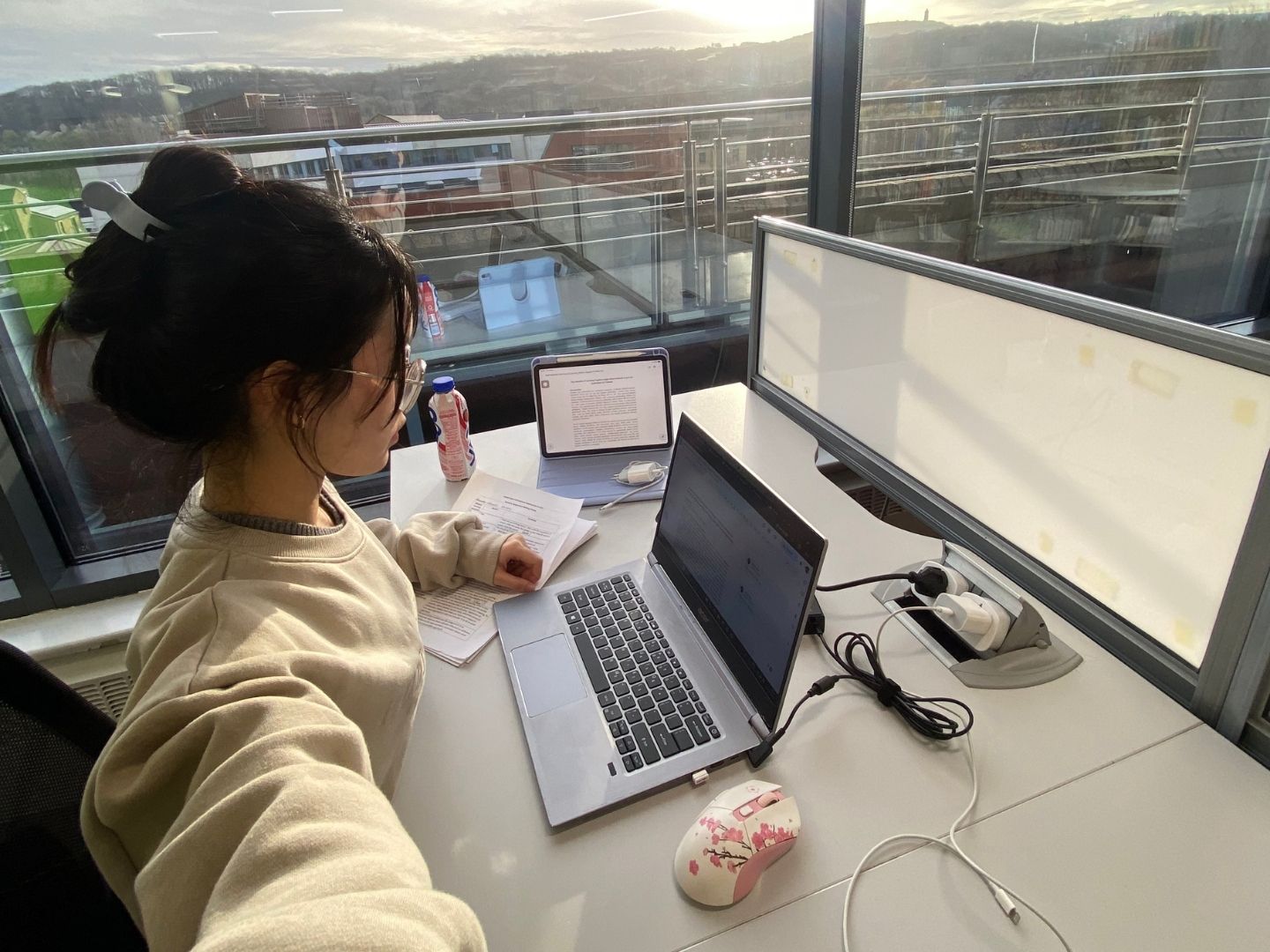
In my first few weeks, I studied quietly and independently, the way I always had in Vietnam. But Education courses in the UK are built around discussion.
When I began studying with classmates, especially other international students, I noticed a big change. Explaining ideas out loud helped me understand theories better and hearing other perspectives showed me there was no single “correct” answer.

4. I changed how I read academic texts
At the beginning, I tried to read everything word by word. It was exhausting and ineffective. Over time, I learned to read strategically:
- I read the essay question first.
- I looked for the author’s main argument, not every detail.
- I asked myself: Do I agree? Why or why not?
This shift saved time and helped me write more analytical essays.
My biggest tip? Just keep moving forward
My first semester in the UK is not about mastering everything. It is about learning how to learn in a new academic culture.
If we feel confused, slow or unsure, we are not failing, we are adjusting. With time, practice and the courage to ask for help, things do become clearer. The words “giving up” are not on the agenda.

Information for International Students
International Information Days
Learn more about studying at the University of Huddersfield by signing up for an International Information Day.
Fees and Funding
Discover everything you need to know about fees and funding for international students.
How to Apply
Find out how to apply to the University of Huddersfield as an international student.